






Latest Post

Medical Waste Incinerator Wet Scrubbing Systems in Ghanaian Hospital Settings
Medical Waste Incinerator Wet Scrubbing Systems in Ghanaian Hospital Settings
In hospital compounds, waste handling is closely linked to daily infection control. Used syringes, contaminated dressings, pharmaceutical residues, and pathological waste cannot be stored for extended periods without increasing operational risk. In many healthcare facilities across Ghana, incineration remains a realistic and widely adopted treatment method because it allows immediate on-site disposal under controlled thermal conditions.
As hospitals expand and public attention to visible smoke and odor increases―particularly in urban and peri-urban areas―technical interest has grown around the medical waste incinerator wet scrubbing system Ghana. Searches for this topic are often driven by engineering teams and NGOs evaluating how emission control can be strengthened without over-complicating daily operation.
Operational Drivers Behind Wet Scrubbing Selection
Hospital incinerators operate close to patient wards, staff housing, or neighboring communities. Concerns raised by administrators often focus on black smoke during start-up, acidic odors, and overall safety for operators.
Wet scrubbing systems are introduced to address these concerns at the flue-gas stage, rather than altering the core combustion process. In Ghanaian hospitals, where facility scale and budget vary widely, wet scrubbing is typically evaluated as an optional enhancement rather than a default requirement.
Combustion Foundation Before Gas Treatment
Dual-Chamber Incineration Structure
Before any scrubbing system is applied, the combustion foundation remains critical. Hospital incinerators commonly use a dual-chamber layout. The primary chamber handles direct combustion of medical waste at temperatures around 850 °C, ensuring effective destruction of infectious materials.
A secondary chamber is installed downstream and operates at higher temperatures, often approaching 1100 °C. Its role is to re-burn flue gases released from the first stage. This secondary oxidation step reduces incomplete combustion products and stabilizes the exhaust stream before it enters any gas treatment equipment. This configuration is a commonly adopted configuration for hospitals and is designed in line with common healthcare waste management practices.
Wet Scrubbing System Function in Hospital Applications
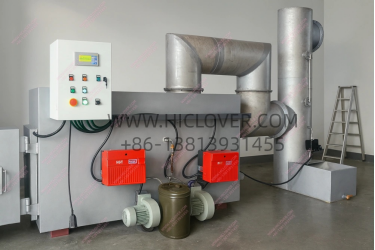
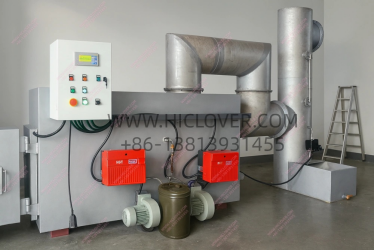
A medical waste incinerator wet scrubbing system typically combines several functions into a compact assembly. Hot flue gas first passes through a quench section where temperature is rapidly reduced. This protects downstream components and limits thermal stress.
Following quenching, the gas enters a washing zone where contact with scrubbing liquid allows acidic components and fine particulates to be absorbed. Depending on project design, neutralization agents may be used in the liquid circuit. The treated gas is then discharged through an induced draft fan and chimney.
In documentation, wet scrubbers are described as functional modules rather than absolute emission guarantees, allowing project owners to align system complexity with local expectations and maintenance capacity.
Automation and Control Integration
Wet scrubbing systems in hospital incinerators are typically integrated into the same PLC control architecture as the combustion system. The PLC coordinates burner operation, chamber temperature monitoring, and auxiliary equipment such as pumps and fans.
For hospitals with limited technical staff, this integration is important. Automated sequencing ensures that the scrubber operates only when required and follows safe start-up and shutdown logic. This reduces manual intervention and supports consistent daily operation.
Diesel Operation and Infrastructure Constraints
Many hospitals operate under unstable power conditions, especially outside major cities. Diesel-fired incinerators remain practical because combustion stability does not depend on grid reliability. Electrical demand is largely limited to control systems and auxiliaries, which can be supported by existing generators.
Wet scrubbing systems are therefore designed with realistic power and water consumption in mind, recognizing that infrastructure constraints influence long-term operability as much as initial technical design.
Application Across Different Hospital Scales
-
Small hospitals and clinics may rely on dry gas treatment or simplified wet systems due to limited space and staffing.
-
Regional hospitals often evaluate wet scrubbing to address community concerns related to odor and visible emissions.
-
Teaching hospitals typically request more detailed system descriptions to support operator training and internal review.
Across these applications, wet scrubbing is positioned as an adaptable solution rather than a fixed standard.
HICLOVER Manufacturing Perspective
HICLOVER operates as a manufacturing factory supplying standardized medical waste incinerator systems with optional wet scrubbing configurations for export markets. Its approach focuses on repeatable system layouts, documented operating logic, and remote technical coordination rather than project-specific experimentation.
General technical information, configuration options, and system overviews are available through the official website:
https://www.hiclover.com/
This documentation-driven approach supports hospitals, EPC contractors, and NGOs conducting technical evaluations through English-language searches.
Practical Evaluation Considerations
When reviewing a medical waste incinerator wet scrubbing system in Ghana, decision-makers often focus on how emission control integrates with daily hospital routines. Combustion stability, automation level, maintenance effort, and operator safety tend to weigh more heavily than theoretical performance claims.
For healthcare facilities balancing infection control, infrastructure limitations, and community sensitivity, wet scrubbing systems represent a technical option that can be scaled to match real operating conditions rather than idealized assumptions.

Incinerator Suppliers in Gabon: Advanced Waste Incinerator Solutions for Sustainable Development

Incinerator Suppliers in Gabon: Advanced Waste Incinerator Solutions for Sustainable Development
As Central Africa accelerates investment in healthcare, environmental protection, and resilient infrastructure, Gabon is placing greater emphasis on controlled waste treatment. From hospitals and laboratories to municipal services and industrial facilities, demand for reliable waste incinerator systems is growing. This has made incinerator suppliers in Gabon a frequently searched topic among government agencies, NGOs, and private operators looking for long-term, compliant solutions.
HICLOVER responds to this demand as a factory-based manufacturer, supplying industrial incineration systems designed for automation, mobility, and rapid deployment in diverse operating environments.
Why Gabon Is Investing in Modern Incineration
Several converging trends are shaping Gabon’s waste management strategy:
-
Expansion of public and private healthcare facilities
-
Increasing attention to environmental protection and emissions control
-
Urban population growth and concentrated waste streams
-
Preference for modular infrastructure that can be deployed quickly
In this context, incineration remains a proven method for the safe destruction of medical, hazardous, and special waste when supported by modern control and combustion technology.
HICLOVER’s Factory-Supply Advantage
For organizations evaluating incinerator suppliers in Gabon, the difference between a manufacturer and a reseller is significant. HICLOVER operates as a direct production source, offering:
-
Stable specifications with controlled component sourcing
-
Direct access to engineering and technical documentation
-
Custom-built systems based on waste type and site conditions
-
Long-term spare parts support and technical continuity
An overview of the manufacturer, product range, and technical philosophy is available at
https://www.hiclover.com/
Application Areas of Waste Incinerators in Gabon
HICLOVER waste incinerators are applied across multiple sectors relevant to Gabon’s development priorities:
Healthcare and Medical Waste
Safe incineration of infectious waste, sharps, pharmaceuticals, and pathological materials using dual-chamber systems and automated temperature control.
Municipal and Community Waste
Compact to mid-capacity incinerators for towns and cities where landfill options are limited or environmentally sensitive.
Industrial and Special Waste
Controlled destruction of production residues, expired products, and regulated waste streams.
Emergency and Remote Operations
Mobile and containerized incinerators for remote sites, camps, and temporary facilities.
Mobile, Modular, and Installation-Free Concepts
Modern infrastructure projects increasingly favor flexibility. HICLOVER integrates this approach into its waste incinerator designs:
-
Containerized mobile incinerators for rapid transport and setup
-
Skid-mounted and trailer-mounted configurations
-
Modular systems requiring minimal civil works
-
Plug-and-operate designs reducing on-site installation time
These features are especially relevant in regions where logistics, timelines, and site conditions vary significantly.
Automation and Technical Strengths
Automation is central to HICLOVER’s engineering approach:
-
PLC-based control systems with real-time temperature display
-
Automatic burner sequencing and safety interlocks
-
Stable combustion control to optimize fuel efficiency
-
Optional data logging for environmental reporting and audits
Technically, systems emphasize:
-
High-grade refractory linings for long service life
-
Multi-stage combustion for complete oxidation
-
Optional flue-gas treatment modules depending on project requirements
This aligns with global trends toward smart infrastructure, operational transparency, and reduced operator dependency.
Choosing the Right Incinerator Supplier in Gabon
When comparing incinerator suppliers in Gabon, experienced buyers focus on lifecycle reliability rather than short-term cost. Key evaluation points include:
-
Manufacturer capability versus intermediary sourcing
-
Experience exporting to Africa and similar climates
-
Availability of mobile and modular solutions
-
Documentation, drawings, and operator training support
Factory-direct suppliers reduce technical risk and ensure long-term operational stability.
Search Visibility and Market Interest
Growing attention to Gabon’s waste infrastructure is reflected in online search activity. A live Google search reference for this topic is available here:
https://www.google.com/search?q=incinerator+suppliers+in+gabon
This trend mirrors broader regional investment in healthcare resilience, environmental compliance, and sustainable development.
Conclusion
As Gabon continues to strengthen its waste management framework, modern waste incinerator technology plays a critical role. For organizations seeking dependable incinerator suppliers in Gabon, factory-based manufacturers like HICLOVER provide automation, modular flexibility, and technical depth suited to both current operational needs and future growth.
Résumé en français
Au Gabon, la gestion des déchets évolue vers des solutions d’incinération modernes, automatisées et modulaires. Les fournisseurs directs d’usine offrent fiabilité, rapidité de déploiement et support technique durable.
Resumen en español
En Gabón, los incineradores modernos son clave para la gestión sanitaria y ambiental. Los proveedores de fábrica con sistemas móviles y automatizados garantizan eficiencia, flexibilidad y soporte a largo plazo.
2026-01-09/09:09:20
|
Incinerator Items/Model |
HICLOVER TS100(PLC)
|
|
Burn Rate (Average) |
100kg/hour |
|
Feed Capacity(Average) |
150kg/feeding |
|
Control Mode |
PLC Automatic |
|
Intelligent Sensor |
Continuously Feeding with Worker Protection |
|
High Temperature Retention(HTR) |
Yes (Adjustable) |
|
Intelligent Save Fuel Function |
Yes |
|
Primary Combustion Chamber |
1200Liters(1.2m3) |
|
Internal Dimensions |
120x100x100cm |
|
Secondary Chamber |
600L |
|
Smoke Filter Chamber |
Yes |
|
Feed Mode |
Manual |
|
Burner Type |
Italy Brand |
|
Temperature Monitor |
Yes |
|
Temperature Thermometer |
Corundum Probe Tube, 1400℃Rate. |
|
Temperature Protection |
Yes |
|
Automatic Cooling |
Yes |
|
Automatic False Alarm |
Yes |
|
Automatic Protection Operator(APO) |
Yes |
|
Time Setting |
Yes |
|
Progress Display Bar |
3.7 in” LCD Screen |
|
Oil Tank |
200L |
|
Chimney Type |
Stainless Steel 304 |
|
1st. Chamber Temperature |
800℃–1000℃ |
|
2nd. Chamber Temperature |
1000℃-1300℃ |
|
Residency Time |
2.0 Sec. |
|
Gross Weight |
7000kg |
|
External Dimensions |
270x170x190cm(Incinerator Main Body) |
|
Burner operation |
Automatic On/Off |
|
Dry Scrubber |
Optional |
|
Wet Scrubber |
Optional |
|
Top Loading Door |
Optional |
|
Asbestos Mercury Material |
None |
|
Heat Heart Technology(HHT) |
Optional |
|
Dual Fuel Type(Oil&Gas) |
Optional |
|
Dual Control Mode(Manual/Automatic) |
Optional |
|
Temperature Record |
Optional |
|
Enhanced Temperature Thermometer |
Optional |
|
Incinerator Operator PPE Kits |
Optional |
|
Backup Spare Parts Kits |
Optional |
|
Mobile Type |
Optional:Containerized/Trailer/Sledge Optional |

Tanzania Waste Incinerator Market Report: Characteristics, Demand Trends, and Applicability of Modern Incineration Solutions
Tanzania Waste Incinerator Market Report: Characteristics, Demand Trends, and Applicability of Modern Incineration Solutions
1. Overview of Tanzania’s Waste Management Landscape
Tanzania, with major cities such as Dar es Salaam, Dodoma, Arusha, Mwanza, and Zanzibar, is experiencing rapid population growth and expanding public-health infrastructure. These factors significantly increase the amount of municipal, biomedical, industrial, and community-generated waste. Many regions still rely on open dumping or uncontrolled burning, especially in peri-urban zones such as Temeke, Ilala, and Kinondoni, creating long-term environmental and public health challenges.
The Government of Tanzania―supported by institutions including the United Nations, WHO, UNDP, and numerous humanitarian agencies―has been promoting safer and more compliant waste-disposal strategies. Incineration technology has therefore become a key component in national and donor-funded waste-management planning.
2. Key Market Characteristics
The waste incinerator market in Tanzania displays several notable structural features:
-
Mixed and high-moisture waste streams, particularly in Dar es Salaam and coastal regions.
-
Significant medical waste volume from hospitals in Dodoma, Arusha, Morogoro, and Mwanza.
-
Decentralized health facilities, including rural clinics across Kilimanjaro, Tanga, and Shinyanga, which require compact and easily operated incinerators.
-
Increasing environmental compliance, influenced by global health programs, UN-backed tenders, and institutional procurement standards.
These characteristics create consistent demand for engineered systems capable of stable combustion, low emissions, and reliable performance in hot, humid, or remote environments.
3. Market Demand and Emerging Trends
Multiple drivers are shaping the growth trajectory of Tanzania’s incinerator market:
-
Healthcare modernization
Expansion of regional hospitals, including facilities in Arusha and Mwanza, increases the need for compliant biomedical waste destruction. -
Humanitarian response and refugee-support operations
UN agencies working in Kigoma, Kasulu, and Tanga require standardized incineration solutions for field clinics, temporary settlements, and emergency medical operations. -
Urbanization and industrialization
Rapid growth in Dar es Salaam generates large volumes of mixed municipal waste, pushing local authorities to explore high-capacity, fuel-efficient incinerators. -
Environmental and regulatory reinforcement
Donor-funded programs emphasize emissions control, ash handling safety, and consistent high-temperature operation.
4. Suitability of Incineration Technology for Tanzania’s Local Conditions
Tanzania’s waste composition and climate conditions require incinerator systems with:
-
Secondary combustion capability for complete burnout of low-calorific or wet waste.
-
Diesel, LPG, or natural gas burners to stabilize combustion when moisture content is high.
-
Top-loading or batch-loading chambers suitable for community waste, animal waste, or large medical waste bags.
-
Mobile or containerized solutions that reduce civil-works requirements in rural districts.
These attributes correspond directly to the systems often deployed by UN missions and NGO logistics teams operating across East Africa.
5. HICLOVER Incinerators: Strengths for the Tanzanian Market
HICLOVER provides a range of incineration technologies that align with Tanzania’s operational requirements:
-
Top-loading incinerators suitable for bulky municipal waste in cities such as Dar es Salaam and Mwanza.
-
Medical waste models with multi-chamber combustion, ideal for hospitals in Dodoma, Arusha, and Morogoro.
-
Containerized mobile incinerators, preferred by NGOs, refugee-camp operators, and UN field missions.
-
Dry and wet gas-cleaning systems, supporting projects with higher emissions-control requirements.
-
Durable refractory structures and PLC-controlled burners, essential for long-term operation under demanding field conditions.
To support SEO structure, the following keyword-linked references point to your HICLOVER domain:
-
medical waste incinerator in Tanzania
-
top-loading waste incinerator
-
containerized incinerator solution
-
solid waste incinerator system
-
Tanzania waste treatment equipment
All links remain within the HICLOVER ecosystem and support keyword relevance.
6. Additional Highlight: Waste Treatment in Tanzania’s Coastal and Island Zones
Coastal cities―especially Dar es Salaam and Zanzibar―face unique environmental sensitivities. Tourism, fishing industries, and densely populated waterfront districts require stringent waste handling to protect coastal ecosystems. Incinerators designed for rapid ignition, reduced emissions, and minimal odor are especially valuable in locations where proximity to residential areas and marine habitats requires tighter operational control.
7. Market Outlook
Tanzania’s incinerator market is expected to expand steadily due to:
-
Continued investment in national and district-level healthcare infrastructure.
-
Growing involvement of the United Nations, especially in public-health projects and humanitarian logistics.
-
Rising environmental awareness among local authorities and development partners.
-
Increased demand for mobile systems capable of serving dispersed rural populations.
-
Government support for regulated and safe medical waste treatment.
These conditions position Tanzania as a high-potential and stable market for modern waste incineration technology.
Tanzania’s evolving waste-management framework presents strong demand for reliable, compliant, and adaptable incinerator solutions. From the urban centers of Dar es Salaam, Dodoma, and Arusha to remote communities across Kigoma and Tanga, engineered incineration systems offer a practical path toward safe waste destruction.
HICLOVER’s versatile product range―with top-loading options, medical-grade combustion systems, and mobile containerized units―aligns with both government and UN procurement requirements. Their technical durability and operational flexibility make them well suited to long-term waste-management strategies in Tanzania.
2025-12-11/14:29:51
|
Incinerator Items/Model |
HICLOVER TS100(PLC)
|
|
Burn Rate (Average) |
100kg/hour |
|
Feed Capacity(Average) |
150kg/feeding |
|
Control Mode |
PLC Automatic |
|
Intelligent Sensor |
Continuously Feeding with Worker Protection |
|
High Temperature Retention(HTR) |
Yes (Adjustable) |
|
Intelligent Save Fuel Function |
Yes |
|
Primary Combustion Chamber |
1200Liters(1.2m3) |
|
Internal Dimensions |
120x100x100cm |
|
Secondary Chamber |
600L |
|
Smoke Filter Chamber |
Yes |
|
Feed Mode |
Manual |
|
Burner Type |
Italy Brand |
|
Temperature Monitor |
Yes |
|
Temperature Thermometer |
Corundum Probe Tube, 1400℃Rate. |
|
Temperature Protection |
Yes |
|
Automatic Cooling |
Yes |
|
Automatic False Alarm |
Yes |
|
Automatic Protection Operator(APO) |
Yes |
|
Time Setting |
Yes |
|
Progress Display Bar |
3.7 in” LCD Screen |
|
Oil Tank |
200L |
|
Chimney Type |
Stainless Steel 304 |
|
1st. Chamber Temperature |
800℃–1000℃ |
|
2nd. Chamber Temperature |
1000℃-1300℃ |
|
Residency Time |
2.0 Sec. |
|
Gross Weight |
7000kg |
|
External Dimensions |
270x170x190cm(Incinerator Main Body) |
|
Burner operation |
Automatic On/Off |
|
Dry Scrubber |
Optional |
|
Wet Scrubber |
Optional |
|
Top Loading Door |
Optional |
|
Asbestos Mercury Material |
None |
|
Heat Heart Technology(HHT) |
Optional |
|
Dual Fuel Type(Oil&Gas) |
Optional |
|
Dual Control Mode(Manual/Automatic) |
Optional |
|
Temperature Record |
Optional |
|
Enhanced Temperature Thermometer |
Optional |
|
Incinerator Operator PPE Kits |
Optional |
|
Backup Spare Parts Kits |
Optional |
|
Mobile Type |
Optional:Containerized/Trailer/Sledge Optional |
Le marché des incinérateurs de déchets au Mozambique — caractéristiques, besoins et perspectives
Le marché des incinérateurs de déchets au Mozambique — caractéristiques, besoins et perspectives
Le Mozambique, avec des centres urbains tels que Maputo, Beira, Nampula, Tete, Pemba et Chimoio, connaît une transformation rapide de son paysage de gestion des déchets. La croissance démographique, l’expansion des services de santé et l’implication constante des organisations internationales — notamment les Nations Unies, l’UNICEF, l’OMS et de nombreuses ONG — renforcent la nécessité de disposer de systèmes d’incinération fiables et adaptés aux conditions locales. Le marché mozambicain des incinérateurs devient ainsi un secteur stratégique pour les collectivités, les structures médicales et les projets humanitaires.
Caractéristiques du marché des déchets au Mozambique
Plusieurs facteurs structurent la situation actuelle :
-
Une forte production de déchets municipaux dans les villes comme Maputo et Matola, composée d’un mélange de plastiques, organiques et déchets industriels légers.
-
Des volumes croissants de déchets médicaux, en particulier dans les hôpitaux régionaux de Beira, Nampula et Tete.
-
Une infrastructure d’enfouissement limitée, notamment dans les zones côtières telles que Pemba et Quelimane, qui exigent des solutions thermiques plutôt que le simple dépôt en décharge.
-
Des projets humanitaires importants, notamment dans le nord, où les bases des Nations Unies et de diverses ONG utilisent des incinérateurs pour gérer les déchets biomédicaux et les déchets des camps.
-
Un climat tropical et humide, nécessitant des équipements robustes, résistants à la corrosion et adaptés à des environnements parfois instables.
Ces conditions stimulent la demande nationale pour des incinérateurs faciles à installer, durables et compatibles avec des usages intensifs.
Besoins du marché et tendances en évolution
Les tendances actuelles du marché mozambicain montrent plusieurs axes de croissance :
• Traitement des déchets biomédicaux dans les centres hospitaliers de Maputo, Nampula, Beira et Tete.
• Solutions autonomes pour les municipalités secondaires comme Lichinga, Gurué ou Mocuba, où les infrastructures de collecte sont limitées.
• Équipements mobiles et containerisés, largement adoptés par les agences onusiennes, l’UNHCR, l’UNICEF et les ONG opérant dans les provinces du Nord (Cabo Delgado, Nampula).
• Besoin de systèmes fiables en zones exposées aux cyclones, où la résilience des équipements et la rapidité de remise en service sont essentielles.
La demande se concentre vers des incinérateurs à double chambre, à haut rendement énergétique et faciles à déployer sur des terrains variés.
Adaptation des incinérateurs aux conditions du Mozambique
Les déchets mozambicains présentent des caractéristiques particulières : taux d’humidité élevé, volumes de plastiques médicaux, ainsi que des flux saisonniers variables selon les zones touristiques et portuaires. Les équipements doivent offrir :
-
Une combustion à température stable, même pour les déchets humides.
-
Des brûleurs fiables au diesel ou au gaz, carburants courants dans les zones urbaines et humanitaires.
-
Des matériaux résistants à la corrosion, impératifs dans les régions côtières comme Pemba, Beira et Quelimane.
-
Une maintenance simplifiée, importante pour les provinces éloignées du centre industriel de Maputo.
-
Une installation rapide, exigée dans de nombreux projets financés ou soutenus par les Nations Unies.
Avantages des incinérateurs HICLOVER au Mozambique
Les incinérateurs HICLOVER répondent précisément aux défis opérationnels du Mozambique. Un thème mis en avant — performance fiable dans les environnements tropicaux et humanitaires — illustre leur pertinence.
Atouts principaux :
-
Modèles containerisés prêts à l’emploi, particulièrement utiles pour les projets de l’ONU, de l’UNICEF ou des ONG dans les provinces du Nord (Cabo Delgado, Nampula).
-
Systèmes à double chambre, assurant une destruction complète des fumées et réduisant les nuisances dans les zones densément peuplées comme Maputo ou Beira.
-
Chargement par le dessus ou latéral, facilitant le traitement des sacs biomédicaux, déchets mélangés et volumes irréguliers.
-
Matériaux réfractaires épais, adaptés aux températures élevées et à l’humidité tropicale persistante.
-
Mobilité, un avantage essentiel pour les bases humanitaires, les camps logistiques et les projets d’urgence.
-
Compatibilité avec différents types de carburants, permettant une utilisation dans les zones où l’approvisionnement est irrégulier.
La combinaison de robustesse, de flexibilité et d’installation simplifiée fait de HICLOVER un choix stratégique pour les institutions publiques, privés et humanitaires.
Thème complémentaire : la gestion des déchets dans les zones post-cycloniques
Le Mozambique est fréquemment touché par des cyclones, principalement autour de Beira et Quelimane. Ces événements créent des volumes exceptionnels de déchets municipaux et médicaux. Dans ces situations, les incinérateurs mobiles deviennent essentiels pour restaurer rapidement les services de base. Les unités HICLOVER, grâce à leur conception renforcée et leur installation rapide, conviennent particulièrement à ces environnements exigeants.
Perspectives du marché
Les perspectives restent positives grâce à :
-
l’expansion du secteur hospitalier,
-
la forte implication des Nations Unies,
-
les programmes de résilience climatique,
-
la recherche de solutions de traitement décentralisées.
Des villes comme Maputo, Beira, Nampula et Tete continueront de représenter une forte demande, mais le nord restera un pôle stratégique en raison des interventions humanitaires.
Le Mozambique fait face à des défis croissants de gestion des déchets, tant urbains que médicaux et humanitaires. Les conditions climatiques, les besoins des collectivités et les activités des organismes internationaux renforcent la nécessité d’incinérateurs performants et résistants. Les incinérateurs HICLOVER s’intègrent parfaitement dans ce contexte, offrant durabilité, mobilité et efficacité adaptées aux réalités mozambicaines — du sud urbain au nord humanitaire et côtier.
2025-12-11/09:03:05
|
Incinerator Items/Model |
HICLOVER TS100(PLC)
|
|
Burn Rate (Average) |
100kg/hour |
|
Feed Capacity(Average) |
150kg/feeding |
|
Control Mode |
PLC Automatic |
|
Intelligent Sensor |
Continuously Feeding with Worker Protection |
|
High Temperature Retention(HTR) |
Yes (Adjustable) |
|
Intelligent Save Fuel Function |
Yes |
|
Primary Combustion Chamber |
1200Liters(1.2m3) |
|
Internal Dimensions |
120x100x100cm |
|
Secondary Chamber |
600L |
|
Smoke Filter Chamber |
Yes |
|
Feed Mode |
Manual |
|
Burner Type |
Italy Brand |
|
Temperature Monitor |
Yes |
|
Temperature Thermometer |
Corundum Probe Tube, 1400℃Rate. |
|
Temperature Protection |
Yes |
|
Automatic Cooling |
Yes |
|
Automatic False Alarm |
Yes |
|
Automatic Protection Operator(APO) |
Yes |
|
Time Setting |
Yes |
|
Progress Display Bar |
3.7 in” LCD Screen |
|
Oil Tank |
200L |
|
Chimney Type |
Stainless Steel 304 |
|
1st. Chamber Temperature |
800℃–1000℃ |
|
2nd. Chamber Temperature |
1000℃-1300℃ |
|
Residency Time |
2.0 Sec. |
|
Gross Weight |
7000kg |
|
External Dimensions |
270x170x190cm(Incinerator Main Body) |
|
Burner operation |
Automatic On/Off |
|
Dry Scrubber |
Optional |
|
Wet Scrubber |
Optional |
|
Top Loading Door |
Optional |
|
Asbestos Mercury Material |
None |
|
Heat Heart Technology(HHT) |
Optional |
|
Dual Fuel Type(Oil&Gas) |
Optional |
|
Dual Control Mode(Manual/Automatic) |
Optional |
|
Temperature Record |
Optional |
|
Enhanced Temperature Thermometer |
Optional |
|
Incinerator Operator PPE Kits |
Optional |
|
Backup Spare Parts Kits |
Optional |
|
Mobile Type |
Optional:Containerized/Trailer/Sledge Optional |
HICLOVER TS20 Top-Loading Incinerator
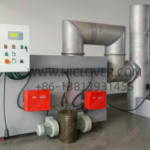
HICLOVER TS20 Top-Loading Incinerator: Advantages, Applications, and Key Features
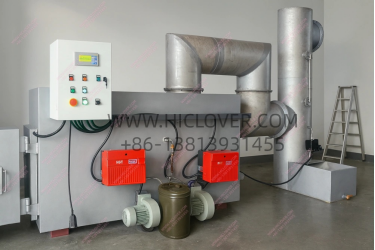
The HICLOVER TS20 is a compact, efficient, and versatile top-loading incinerator, designed especially for organizations that require a simple, safe, and reliable waste-management solution. Its defining feature―the top open door―makes loading waste faster, safer, and more ergonomic, offering clear advantages when compared with front-loading waste systems. As more facilities shift toward flexible and mobile waste-treatment solutions, the TS20 has become a preferred choice for small clinics, veterinary stations, farms, field laboratories, camp operations, and emergency-response units worldwide.
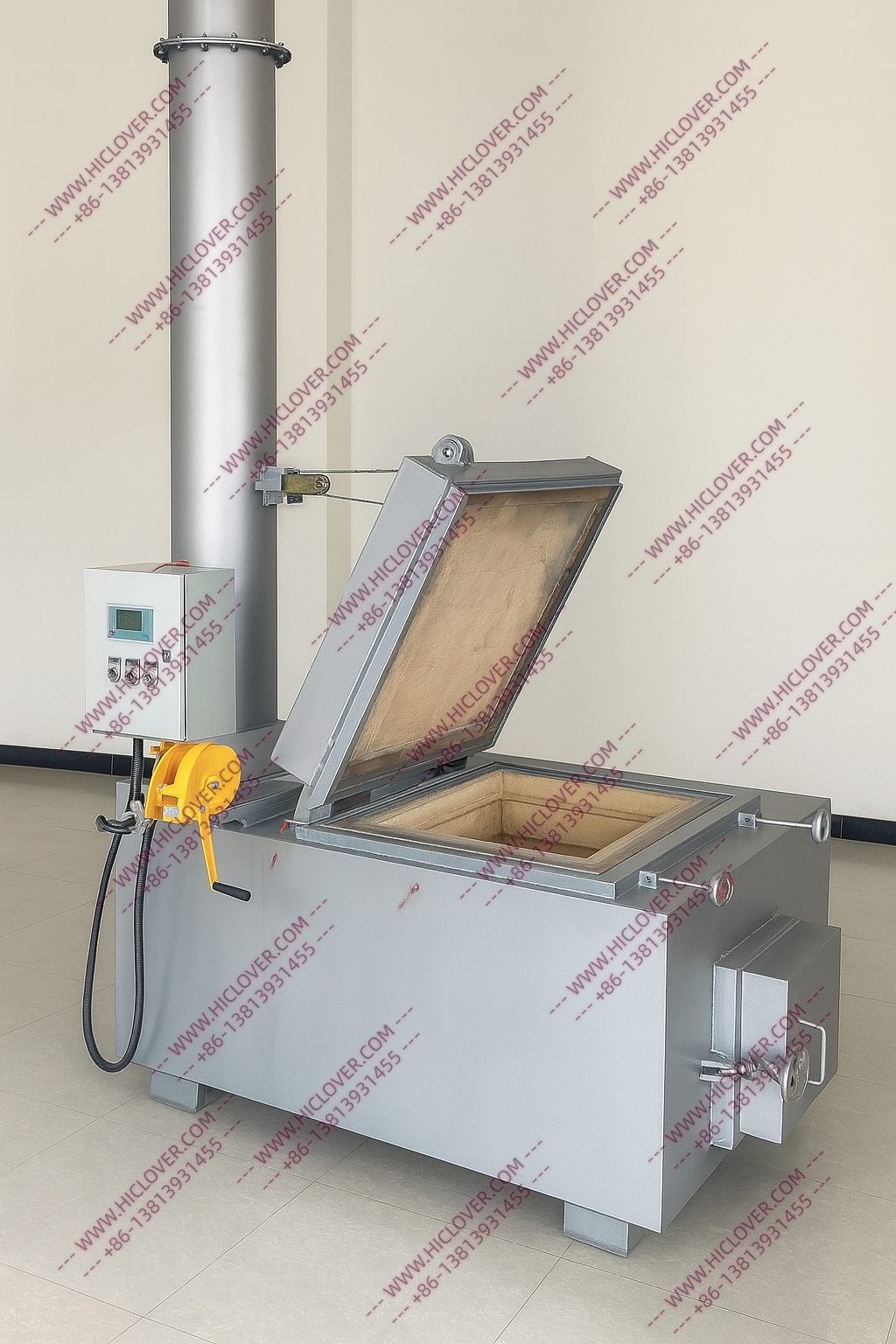
Top-Loading Advantage: Why the Top Open Door Matters
The top-loading design of the TS20 is engineered to simplify the whole waste-handling workflow. Opening from the top allows operators to directly drop waste into the chamber without the need to push or compress materials. This is especially valuable when disposing of paper waste, plastic packaging, laboratory residues, agricultural by-products, and small animal remains.
Key benefits of a top open door structure include:
-
Faster loading and less manual handling
-
Safer operation with reduced heat escape
-
More efficient feeding for irregular or bulky waste
-
Better compatibility with mobile and temporary installations
-
Simple daily operation for users with limited technical training
This loading method reduces operational errors, minimizes downtime between batches, and improves the consistency of combustion cycles.
Core Technical Features of HICLOVER Incinerators
Although compact, the HICLOVER TS20 shares the same engineering principles used across the company’s larger industrial models. These features ensure long service life, stable performance, and environmental protection:
-
Primary combustion chamber with reinforced refractory lining
-
Secondary chamber capable of high-temperature gas re-burning to reduce smoke and odor
-
Digital or PLC control system for temperature display, burner timing, and safety interlocks
-
Automatic burner operation with diesel, LPG, or natural gas options
-
Thermocouples for chamber monitoring to maintain optimal burning curves
-
Chimney with optional wet scrubber when higher air-quality compliance is required
-
High-efficiency insulation that reduces heat loss and fuel consumption
These standard HICLOVER features make the TS20 a reliable, low-maintenance unit suitable for long-term or short-term deployment.
Mobile and Flexible Deployment Options
A major advantage of the TS20 top-loading model is its compatibility with multiple mobile installation platforms. Many customers operate in environments where permanent construction is impractical. For this reason, HICLOVER offers the TS20 in several flexible packages:
-
Trailer-mounted mobile incinerator for farm inspections, vet services, and rural medical units
-
Containerized mobile system with ventilation, integrated chimney ports, and quick-connection wiring
-
Skid-mounted structure for rapid installation in construction sites, oil camps, and emergency shelters
-
Field-camp version designed for NGOs, humanitarian operations, and temporary waste-management stations
The low-installation requirement of the TS20―combined with its top open door for easy vertical loading―makes it ideal for these operational environments.
Application Scenarios Across Different Sectors
Because of its design simplicity and combustion reliability, the HICLOVER TS20 top-loading incinerator is widely used across various industries:
1. Medical and Clinical Waste
Small clinics, rural hospitals, and health posts use the TS20 for the destruction of infectious waste, dressings, PPE, and contaminated disposables, especially where central waste-treatment facilities are unavailable.
2. Veterinary and Poultry Waste
The top open door simplifies loading of small animal carcasses, feathers, by-products, and farm-related waste, making it a practical solution for poultry farms and veterinary labs.
3. Laboratory and Research Facilities
The model is suitable for biological samples, contaminated paper waste, and light packaging, where safe on-site destruction prevents cross-contamination.
4. Military Bases and Temporary Camps
Compact size and mobile configurations allow quick deployment in field bases, engineering camps, border posts, and disaster-response areas.
5. Commercial and Industrial Use
Workshops, hotels, and small manufacturing plants benefit from an on-site disposal system for paper waste, packaging, and light combustible materials.
Why the TS20 Stands Out in Its Category
The HICLOVER TS20 combines the simplicity of a small incinerator with the performance of a professional combustion system. It delivers:
-
Strong structural reliability
-
Low installation effort
-
High safety through digital/PLC control
-
Efficient burning with low smoke release
-
Excellent compatibility with mobile installations
-
User-friendly operations even for non-technical staff
These characteristics make it one of the most widely adopted top-loading incinerators in the small-capacity range.
Conclusion
The HICLOVER TS20 top-loading incinerator offers an effective balance of mobility, safety, convenience, and operational stability. Its top open door loading system directly improves workflow efficiency in all types of waste-management environments―from small clinics to agricultural operations, humanitarian missions, and remote-site industries. With robust engineering, dependable controls, and flexible deployment options, the TS20 continues to be one of the most versatile and globally trusted solutions in the HICLOVER product line.
2025-11-24/09:55:38
|
Incinerator Items/Model |
HICLOVER TS100(PLC)
|
|
Burn Rate (Average) |
100kg/hour |
|
Feed Capacity(Average) |
150kg/feeding |
|
Control Mode |
PLC Automatic |
|
Intelligent Sensor |
Continuously Feeding with Worker Protection |
|
High Temperature Retention(HTR) |
Yes (Adjustable) |
|
Intelligent Save Fuel Function |
Yes |
|
Primary Combustion Chamber |
1200Liters(1.2m3) |
|
Internal Dimensions |
120x100x100cm |
|
Secondary Chamber |
600L |
|
Smoke Filter Chamber |
Yes |
|
Feed Mode |
Manual |
|
Burner Type |
Italy Brand |
|
Temperature Monitor |
Yes |
|
Temperature Thermometer |
Corundum Probe Tube, 1400℃Rate. |
|
Temperature Protection |
Yes |
|
Automatic Cooling |
Yes |
|
Automatic False Alarm |
Yes |
|
Automatic Protection Operator(APO) |
Yes |
|
Time Setting |
Yes |
|
Progress Display Bar |
3.7 in” LCD Screen |
|
Oil Tank |
200L |
|
Chimney Type |
Stainless Steel 304 |
|
1st. Chamber Temperature |
800℃–1000℃ |
|
2nd. Chamber Temperature |
1000℃-1300℃ |
|
Residency Time |
2.0 Sec. |
|
Gross Weight |
7000kg |
|
External Dimensions |
270x170x190cm(Incinerator Main Body) |
|
Burner operation |
Automatic On/Off |
|
Dry Scrubber |
Optional |
|
Wet Scrubber |
Optional |
|
Top Loading Door |
Optional |
|
Asbestos Mercury Material |
None |
|
Heat Heart Technology(HHT) |
Optional |
|
Dual Fuel Type(Oil&Gas) |
Optional |
|
Dual Control Mode(Manual/Automatic) |
Optional |
|
Temperature Record |
Optional |
|
Enhanced Temperature Thermometer |
Optional |
|
Incinerator Operator PPE Kits |
Optional |
|
Backup Spare Parts Kits |
Optional |
|
Mobile Type |
Optional:Containerized/Trailer/Sledge Optional |